Responsive Web Design and Regular Expressions
Resources:
- A Complete Guide to Grid
- https://css-tricks.com/snippets/css/complete-guide-grid/
- Regex
- https://levelup.gitconnected.com/wtf-is-regex-really-4dd563ee5ce0
Grid CSS
CSS Grid Layout is a 2-dimensional system, meaning it can handle both columns and rows, unlike flexbox which is largely a 1-dimensional system.
Terminology
- Grid Container
- The element on which display: grid is applied. It’s the direct parent of all the grid items.
<!-- .container is the grid container.  -->
<div class="container">
  <div class="item item-1"> </div>
  <div class="item item-2"> </div>
  <div class="item item-3"> </div>
</div>
- Grid Item
- The children of the grid container.
<!-- the .item elements are grid items, but .sub-item isn’t.  -->
<div class="container">
  <div class="item"> </div>
  <div class="item">
    <p class="sub-item"> </p>
  </div>
  <div class="item"> </div>
</div>
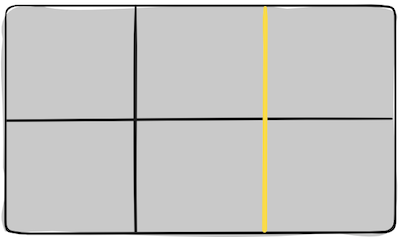
- Grid Line
- The dividing lines that make up the structure of the grid. They can be vertical or horizontal.
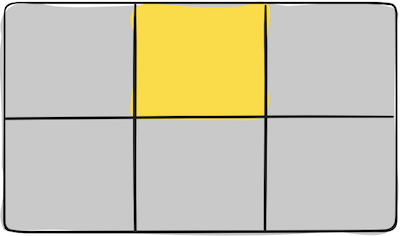
- Grid Cell
- The space between two adjacent row and two adjacent column grid lines. It’s a single “unit” of the grid.
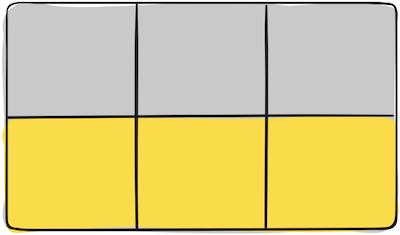
- Grid Track
- The space between two adjacent grid lines.
Regex
A regular expression (shortened as regex or regexp; also referred to as rational expression) is a sequence of characters that define a search pattern. Usually such patterns are used by string-searching algorithms for “find” or “find and replace” operations on strings, or for input validation.
RegEx allows us to check for patterns in text strings such as trying to match a valid email address or password. One of the great superpowers of RegEx is being able to define your own search criteria for a pattern to fit your needs, and it is like a language of its own.